Posts
3D Printing for Wildlife Conservation: A bongs.design & ACCB Case Study
Tech Meets Nature: How 3D Printing is Supporting Wildlife Conservation in Cambodia
At bongs.design, we believe that great design and modern manufacturing aren’t just for commercial products—they are powerful tools for solving real-world problems.
Recently, we had the privilege of proving this by partnering with the Angkor Center for Conservation of Biodiversity (ACCB). Located near the famous temples of Angkor, ACCB is a vital hub for the rescue, rehabilitation, and release of Cambodia’s endangered wildlife.
Their team approached us with a unique challenge: they needed specialized tracking equipment that simply didn’t exist off-the-shelf. Here is how we used custom CAD design and 3D printing for wildlife conservation to help them monitor threatened species in the field.
The Challenge: Custom Gear for Unique Species
Tracking animals after they are released back into the wild is crucial for understanding their survival rates and behavior. However, attaching a GPS unit to a delicate bird or a semi-aquatic reptile requires precision engineering.
Standard tracking mounts are often too heavy, bulky, or poorly shaped for specific species. ACCB needed gear that was:
- Lightweight: To ensure it doesn’t impede animal movement or flight.
- Durable: Able to withstand harsh field conditions, mud, and water.
- Ergonomic: Designed specifically for the anatomy of the animal to prevent injury.
This is where rapid prototyping and 3D printing shine. We were able to create custom solutions tailored exactly to the needs of the ACCB researchers and the animals they protect.
Project 1: The Ibis GPS Tracker Remix
One of ACCB’s key focuses is the preservation of endangered ibis species. Tracking these large birds requires a backpack-style mount that sits comfortably between their wings.
We started with an existing, open-source design for a bird tracker. However, it wasn’t quite right for the specific species and GPS hardware ACCB was using.
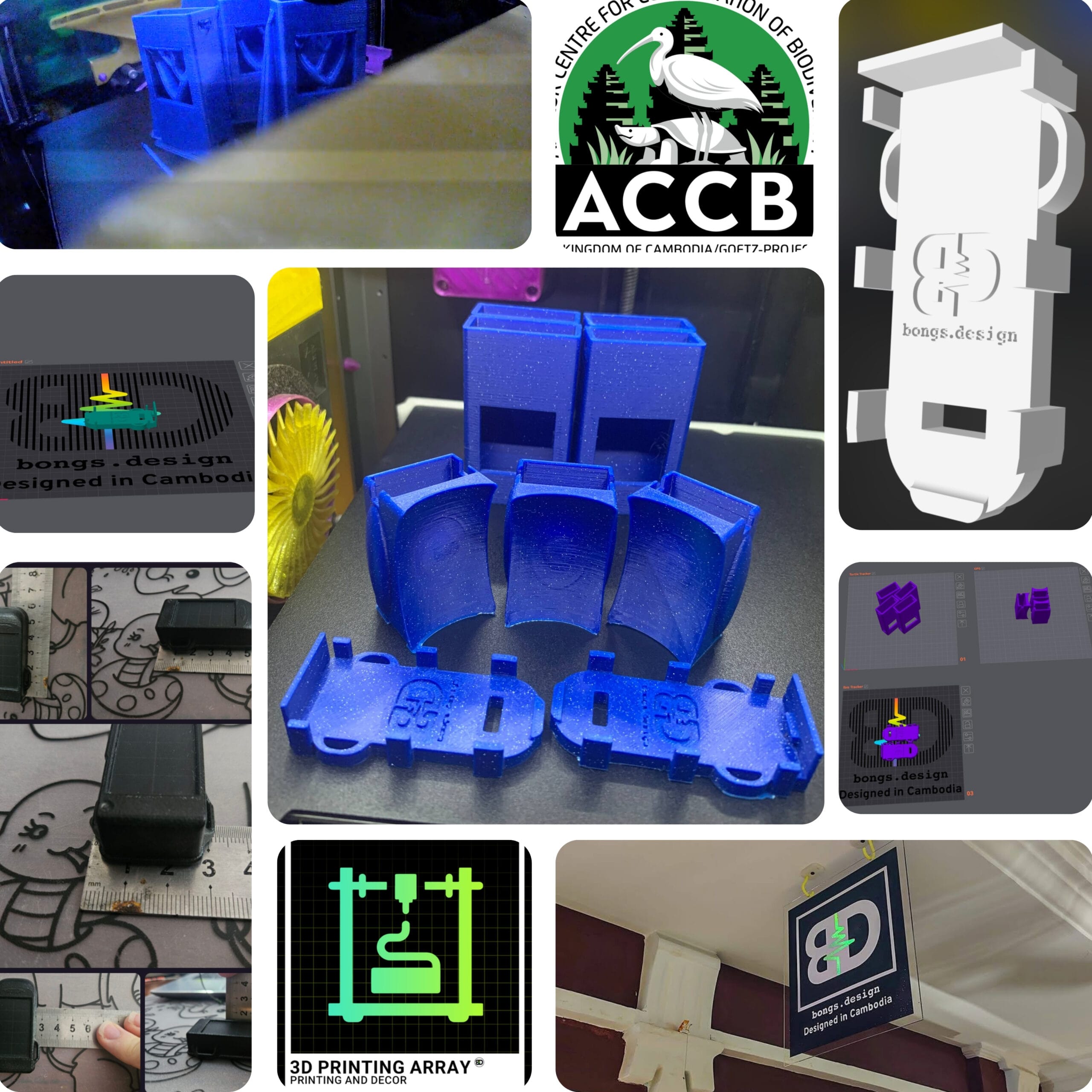
The Design Process: Using CAD software, we “remixed” the original design. We adjusted the dimensions to perfectly house their specific GPS transmitters and modified the strap attachment points to ensure a secure, non-invasive fit for the ibis. By using 3D printing, we could quickly produce a prototype, let the ACCB team test the fit, and make immediate adjustments before finalizing the design.
Project 2: Turtle and Wildlife Tracking Housings
Turtles present an entirely different set of design challenges. A tracker mounted on a turtle shell needs to be incredibly rugged and low-profile to prevent it from getting snagged on underbrush.
We designed and 3D printed custom enclosures tailored to the curvature of different turtle species’ shells. These housings protect the sensitive electronic components from impact and environmental exposure while allowing the necessary signals to transmit clearly.
Beyond Tracking: Supporting Daily Operations
The flexibility of 3D printing means we aren’t limited to just tracking gear. We also assisted ACCB by printing various replacement parts and custom hardware needed for their daily conservation operations at the center. When a specific plastic part breaks in a remote location, being able to design and print a replacement on demand is a game-changer.
Why 3D Printing Matters for Conservation
This partnership highlights why additive manufacturing is vital for “Tech for Good” initiatives. Traditional manufacturing requires expensive molds and minimum order quantities in the thousands—impossible for conservation groups that need only five or ten highly specialized items.
At bongs.design, we can bridge that gap. We offer:
- Rapid Iteration: We can go from a design idea to a physical part in hours.
- Customization: Every part can be unique without increasing costs.
- Material Variety: We can select materials based on needs, from lightweight PLA for prototypes to durable ABS or PETG for field-ready gear.
We are incredibly proud to support the tireless work of the ACCB team. Seeing our designs play a small role in helping an endangered ibis take flight back into the wild is the ultimate design reward.
READ HERE: https://www.facebook.com/share/v/1819xi7SpD/